
Between Fear and Excitement: What Do We Do When Things Are Changing Too Fast?


In my years of teaching at a public high school, two conflicting realities were taking place at the same time.
On one hand, there was a lot of fear regarding AI and how students’ reliance on it would affect their ability to think independently and creatively, in addition to generating any authentic work. Fears regarding teacher use of AI were not absent either. What happens when teachers create content, assessments, or give feedback using AI? Will their teaching be less authentic, less thoughtful, or perhaps even less their own?
On a macro level, we have seen the same fear in almost every aspect of our society. Some claim that most jobs we know today will disappear and will do so at such a fast pace that people will not have enough time to adapt, retrain, or even understand what skills they will need next.
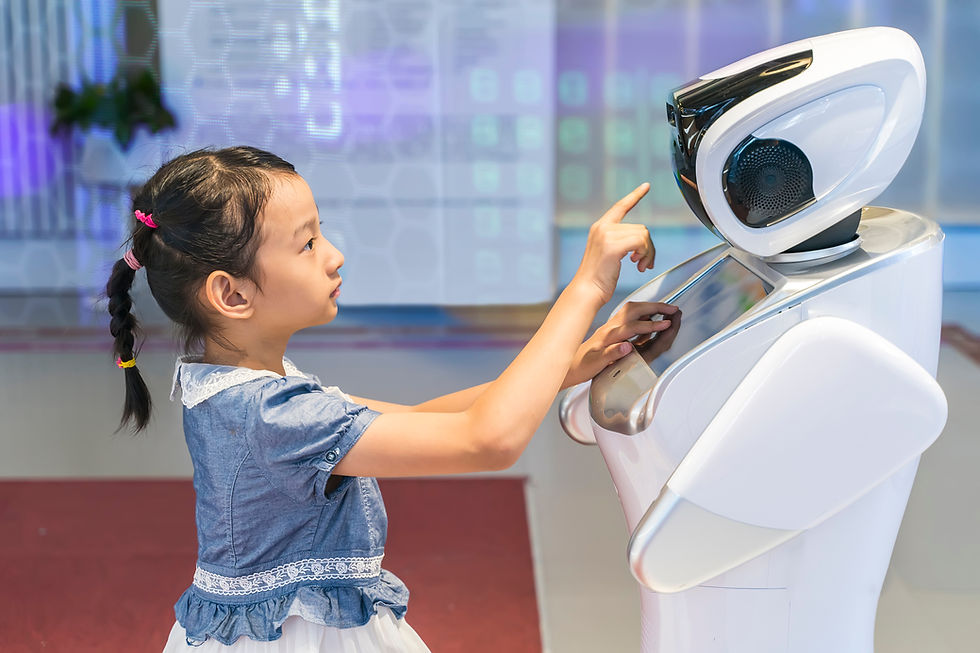
Pessimists or overly optimistic AI enthusiasts go to such lengths as claiming that even teachers will be replaced by technology (as if we would entrust AI or robots to ‘babysit, or coach, or guide’ our kids… would we, though?)
On the other hand, there was just as much excitement, too. Indeed, almost every professional development course, coaching, or faculty meeting was about AI and how to use it to improve student performance and to increase teacher productivity*, among other things. AI-powered games, content generators, rubrics, and more were appearing everywhere, promising to make teaching and learning more efficient, engaging, and personalized.
We've seen this excitement manifest on a larger societal scale as well, and to an unmatched degree. Overly zealous enthusiasts believe AI is simply the missing piece that will solve a lot of problems in various industries, thus pushing for trillions of dollars of investments into it - something hardly ever seen before! Some hope it will accelerate progress and increase productivity, which will then give us humans more time to spend with family and friends. A very nice reality if all were that simple, right?
Both the fear and the hype can be equally damaging, nevertheless.
As Roosevelt once said while taking office during the Great Depression, “the only thing we have to fear is fear itself.” And if you have experienced fear, you would know its debilitating power and how it can make us resist change before we even understand it.
Too much excitement can be debilitating too, in a different way. When we pour too much money, attention, and energy into one promise, we inevitably take them away from something else—including, perhaps, the very human skills and relationships that technology is supposed to support (but not replace). And when expectations grow fast, we risk creating a bubble. And when that bubble bursts, it will leave us dealing not only with the losses, but also with everything we neglected along the way.

So, what do we do? What should we do?
I strongly believe in human agency. Our skills, judgment, experience, and ability to learn still matter—even when a machine can perform some of the same tasks.
Therefore, I believe we need to continue developing and mastering new skills and, perhaps more importantly, becoming more conscious of the ones we already have.
After all, we don’t live in a vacuum.
Simply by living, working, socializing, solving everyday problems, making mistakes, and reflecting on our experiences, we inevitably develop skills along the way—often without even realizing it. The challenge, then, is not only to acquire new skills, but to recognize what we already know and can do, learn to articulate it, and understand how those skills can be applied in new and changing circumstances.
So, perhaps these are the questions worth asking:

What do we already know?
How do we know it?
How can we prove that we know something?
And, most importantly, why does it matter?
These questions have always been at the center of educational philosophy, but they have become even more significant as technology is outpacing our ability to adapt to the new realities, especially in the reality of AI.
And once we know what skills we already master, we would be able to determine which skills we could transfer to any field. Being able to do so will help us be prepared for any change, no matter how fast or furious it arrives at our doors.
*Teacher productivity is more about adequate workload and admin support than anything else, because teachers do move mountains in every single lesson with or without AI anyways.


Comments